

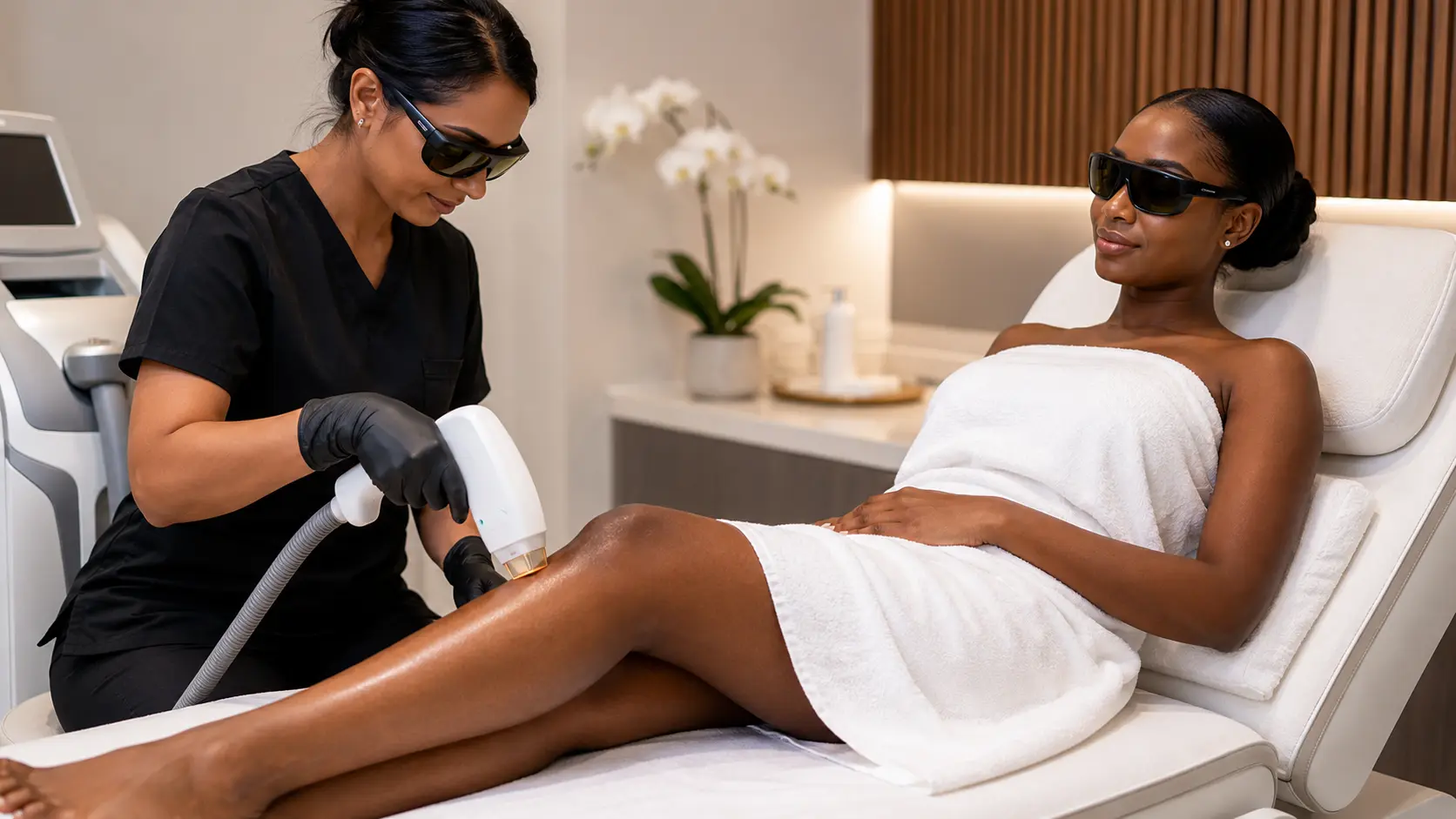
Laser hair removal has changed significantly over the years. Treatments that were once recommended mainly for people with light skin and dark hair can now be customized for a much wider range of complexions.
However, not every laser or treatment setting is appropriate for every skin tone. When considering laser hair removal for dark skin, the technology being used and the provider’s experience treating melanin-rich skin are especially important.
At VITAL MedSpa in Hallandale Beach, laser hair removal treatments are customized according to the patient’s skin tone, hair type, treatment area, and personal goals.
Is Laser Hair Removal Safe for Dark Skin?
Yes, laser hair removal can be performed safely on darker skin tones when the provider uses appropriate technology and carefully selected energy settings.
The challenge is that laser hair removal works by targeting pigment in the hair. Darker skin naturally contains more melanin, so an improperly selected device or overly aggressive setting may heat the surrounding skin instead of focusing primarily on the hair follicle.
This can increase the possibility of:
- Temporary redness or swelling
- Burns or blistering
- Post-inflammatory hyperpigmentation
- Temporary lightening of the skin
- Prolonged irritation
Modern laser systems can better distinguish between the pigment in the hair and the pigment in the surrounding skin. This has made treatment more accessible for patients with medium, brown, and deeper skin tones.
The provider must still evaluate each patient individually. Skin tone, recent sun exposure, medications, sensitivity, hair color, and hair thickness can all affect the treatment plan.
Why the Laser Technology Matters
Laser hair removal should never be approached as a one-setting-fits-all treatment.
Different skin tones and hair types absorb light differently. A device and setting that work well for fair skin may not be appropriate for someone with a deeper complexion.
VITAL MedSpa uses InMode’s FUSION Light and FUSION Dark technologies. FUSION Light is optimized for lighter complexions, while FUSION Dark is designed to address coarse and stubborn hair on darker skin tones.
This allows the treatment to be adjusted more precisely instead of using the same protocol for every patient.
During your consultation, the provider may evaluate:
- Your natural skin tone
- Whether your skin is currently tanned
- The color and thickness of your hair
- The treatment area
- Previous reactions to laser treatments
- Medications or skincare products you use
- Your history of pigmentation changes or scarring
In some cases, a test spot may be recommended before treating a larger area.
Which Hair Types Respond Best?
Laser hair removal generally works best when there is a noticeable contrast between the hair and surrounding skin.
Dark, coarse hair usually absorbs laser energy more effectively than very light or fine hair. This means areas with thick, dark hair may respond more predictably than areas with peach fuzz or very fine growth.
Laser hair removal is typically less effective for:
- White hair
- Gray hair
- Very light blonde hair
- Some shades of red hair
- Extremely fine facial hair
These hair colors contain less of the pigment the laser is designed to target.
Hormonal hair growth can also behave differently. Hair on the chin, upper lip, jawline, or neck may require maintenance sessions, especially when the growth is influenced by hormonal changes or conditions such as polycystic ovary syndrome.
What Areas Can Be Treated?
Laser hair removal can be used on many areas of the face and body, including:
- Underarms
- Bikini line
- Brazilian area
- Legs
- Arms
- Back
- Chest
- Stomach
- Chin
- Upper lip
- Jawline
- Neck
The ideal settings and number of sessions will vary by area. Coarse body hair may respond differently from hormonally influenced facial hair.
How Many Laser Hair Removal Sessions Will You Need?
Hair grows in cycles, and laser energy is most effective when a hair is in its active growth phase. Because not every hair enters that phase at the same time, multiple appointments are necessary.
Many patients require approximately six or more sessions, although the total can vary based on:
- Hair density
- Hair thickness
- Treatment area
- Skin tone
- Hormonal influences
- Previous hair-removal methods
- Consistency with appointments
Appointments are commonly spaced several weeks apart. Your provider will recommend a schedule based on the body area and how quickly the hair returns.
After completing the initial series, some patients choose occasional maintenance treatments to manage new or returning growth.
How to Prepare for Laser Hair Removal
Proper preparation helps reduce irritation and allows the laser to target the hair more effectively.
Follow the instructions provided during your consultation. Common recommendations may include:
Avoid tanning
Avoid intentional tanning, tanning beds, and excessive sun exposure before your appointment. A recent tan changes the amount of pigment in the skin and may affect which settings can be used safely.
Do not wax or tweeze
Waxing and tweezing remove the hair from the follicle. The laser needs that hair structure in place to deliver energy to the intended target.
Your provider will tell you how long to avoid these methods before treatment.
Shave as directed
Patients are often asked to shave the treatment area before their session. Do not shave immediately before treatment unless your provider specifically instructs you to do so.
Review your medications and skincare
Tell your provider about prescription medications, supplements, topical retinoids, exfoliating acids, antibiotics, and other products that may increase sensitivity.
Do not discontinue a prescribed medication without first speaking with the clinician who prescribed it.
Arrive with clean skin
The treatment area should generally be free from lotion, self-tanner, deodorant, perfume, makeup, and other topical products.
What Happens After Treatment?
Temporary redness, warmth, sensitivity, or small bumps around the hair follicles can occur after treatment. These effects are often mild and improve within hours or a few days.
Your personalized aftercare instructions may include:
- Keeping the area clean
- Avoiding unnecessary rubbing or scratching
- Using gentle, fragrance-free skincare
- Protecting exposed areas from the sun
- Avoiding tanning products
- Waiting before using strong exfoliants or retinoids
- Avoiding excessive heat until irritation settles
Do not pick at irritated skin or attempt to pull out treated hairs. Some hairs may appear to continue growing before they gradually shed.
Contact your provider if you develop blistering, intense pain, worsening swelling, open skin, drainage, or a significant change in skin color.
Will Laser Hair Removal Cause Hyperpigmentation?
Temporary darkening or lightening of the skin is possible after laser hair removal, particularly when inappropriate equipment or overly aggressive settings are used.
Patients with deeper skin tones may be more prone to post-inflammatory hyperpigmentation after skin irritation. This does not mean they cannot receive treatment. It means treatment must be carefully planned.
The risk can be reduced by:
- Using technology appropriate for the patient’s skin tone
- Starting with conservative settings when appropriate
- Avoiding treatment on recently tanned skin
- Following sun-protection instructions
- Reporting medications and skin conditions
- Choosing a provider experienced with multiple complexions
Questions to Ask Before Your Treatment
Before scheduling laser hair removal for dark skin, consider asking:
- Have you treated patients with my complexion before?
- Which device will be used?
- How will the settings be customized?
- Do you recommend a test spot?
- What side effects should I expect?
- How many sessions may be needed?
- What should I avoid before and after treatment?
- What should I do if I notice a skin reaction?
A professional provider should be willing to explain the procedure, benefits, limitations, and possible risks before you begin.
Does Laser Hair Removal Work Permanently?
Laser hair removal is best understood as a long-lasting reduction in unwanted hair.
After a complete series, many patients notice that the remaining hair grows more slowly and appears finer, softer, or less dense. Results vary, and no provider should guarantee that every hair will disappear permanently.
Maintenance may be necessary due to hormonal changes, age, pregnancy, certain medications, or naturally developing new hair follicles.
Laser Hair Removal for Dark Skin in Hallandale Beach
Your complexion should not automatically exclude you from considering laser hair removal. The key is receiving an individualized evaluation and using technology designed to treat your skin and hair characteristics appropriately.
At VITAL MedSpa, we use FUSION Light and FUSION Dark technology to create customized laser hair removal plans for a wide range of skin tones.
Schedule a consultation at our Hallandale Beach medspa to learn whether laser hair removal is appropriate for your skin, hair type, and treatment goals.
This article is intended for general educational purposes and does not replace a personalized medical consultation.