

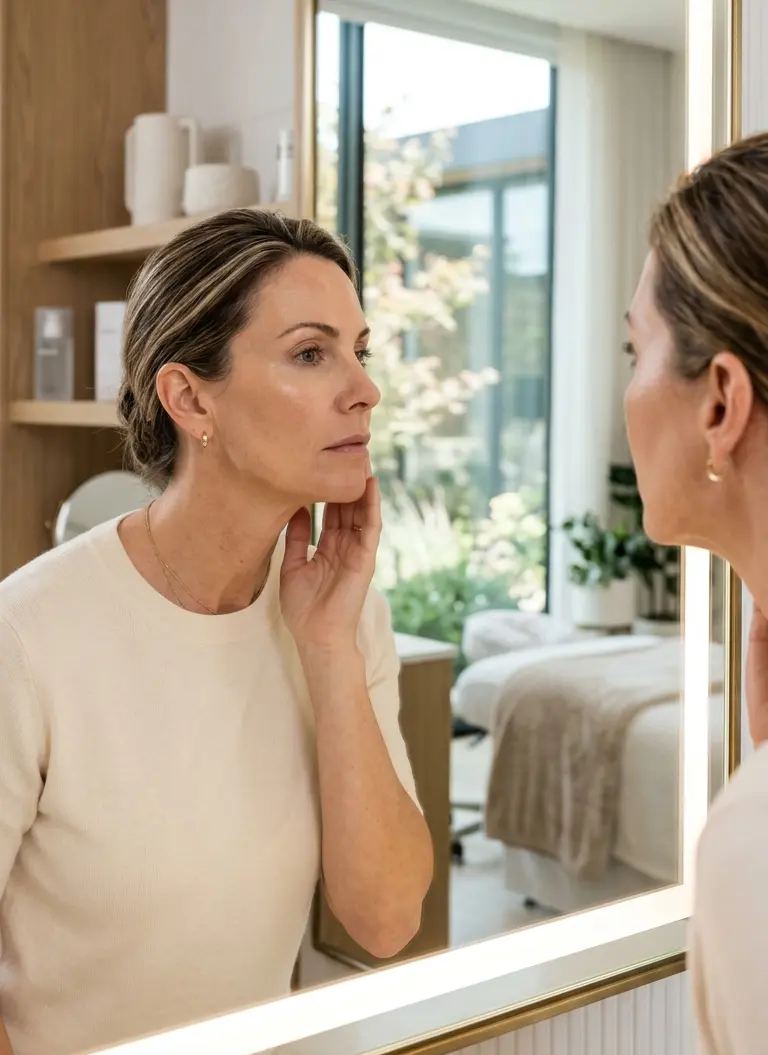
If you have been searching for how to fix Ozempic face, you are probably not asking for a trendy internet explanation. You want to know what is actually happening to the face, whether it is reversible, and which treatments are worth considering.
The first thing I would make clear is this: “Ozempic face” is not a formal medical diagnosis. It is a popular label used to describe the hollow, tired, or looser facial appearance some people notice after rapid weight loss. The facial changes are not unique to Ozempic itself. They are more closely linked to how quickly facial fat volume drops, how much skin elasticity you already had, and how your skin responds to the change. Cleveland Clinic explains that rapid weight loss can make gauntness, sunken cheeks, wrinkles, sagging skin, thinner lips, and more prominent facial structure appear more quickly, especially in people who are older or already have lower facial fat reserves.
That distinction matters, because the best fix is usually not one single treatment. In most cases, the real answer is a combination of:
- slowing or stabilizing weight loss when appropriate,
- restoring volume where the face looks hollow,
- improving skin quality and elasticity,
- and choosing treatments that make you look refreshed, not overfilled.
At Vital MedSpa, that is the angle I would lean into throughout the article: not “panic and fill everything,” but build a plan around the actual concern hollow cheeks, under-eye shadowing, early jowling, crepey skin, or a combination of all four. Vital MedSpa’s service pages already support that approach through medically supervised weight loss, dermal fillers, PRP, and Morpheus8 BURST for collagen remodeling and skin tightening.
What Is Ozempic Face, Exactly?
“Ozempic face” is the casual term people use when the face starts looking slimmer in a way that feels less “defined” and more drawn, hollow, or older-looking. Common signs include:
- hollow cheeks,
- under-eye sunkenness,
- more visible nasolabial folds,
- looser skin around the lower face,
- new or more obvious fine lines,
- and a generally tired appearance.
What makes the term confusing is that it can sound like the medication is directly damaging facial tissue. That is not how major medical and dermatology sources frame it. Cleveland Clinic and dermatology sources describe it as a visible consequence of fast fat loss and age-related skin changes becoming more obvious, rather than a separate disease process.
This is also why two people can lose a similar amount of weight and look very different afterward. One person may simply look more sculpted. Another may notice temples flattening, cheeks dropping, and the jawline softening. Age, baseline skin elasticity, how quickly the weight came off, and where the person naturally stores facial fat all make a difference. Cleveland Clinic specifically notes that older adults are more likely to notice these changes because they already tend to have lower subcutaneous fat in the face.
Why the term is popular but medically oversimplified
The phrase went viral because it is catchy. The problem is that it lumps several different issues into one label:
- true volume loss,
- skin laxity,
- dehydration-related dullness,
- and normal age-related changes that become more noticeable after weight loss.
That oversimplification can lead people toward the wrong fix. If the issue is mostly loose skin, filler alone may not be the best answer. If the issue is mostly hollowing in the cheeks or temples, skin-tightening by itself may help only modestly.
Why Ozempic Face Happens
The short explanation is simple: when body weight drops quickly, the face often loses fat volume too. Facial fat pads help support the skin and maintain softness in areas like the cheeks, temples, under-eyes, and around the mouth. When that support shrinks, contours can look sharper, but also more tired or deflated.
Cleveland Clinic also notes that rapid weight loss is associated with lower collagen and elastin support, which can make the skin look less firm and more wrinkled. That is why some people do not just say, “My face got thinner.” They say, “My face looks older.”
Forefront Dermatology describes the visible pattern well: hollow cheeks, deeper folds, more noticeable fine lines, sagging jowls, and under-eye sinking can all become more obvious when facial volume falls quickly.
Rapid weight loss and facial fat loss
This is the biggest driver. The faster the change, the less time the skin has to adapt. Cleveland Clinic states plainly that the faster the weight loss, the more likely you are to notice facial aging changes.
That is exactly why medically supervised weight loss matters in the broader conversation. Vital MedSpa’s weight loss program emphasizes personalized plans, medication when appropriate, nutrition guidance, and regular follow-up rather than a reckless “lose as much as possible as fast as possible” mindset. That positioning works very well here because it supports a prevention angle as well as a treatment angle.
Collagen, elastin, and skin laxity
Facial aging after weight loss is not only about fat. Skin quality matters too. If collagen support is weaker, the face may not “bounce back” the way patients expect. This is where treatments designed to stimulate remodeling can become relevant. Cleveland Clinic highlights the role of collagen and elastin in the appearance of rapid facial aging after weight loss. Vital MedSpa’s Morpheus8 BURST page specifically describes RF microneedling as a treatment that remodels collagen, tightens tissue, improves texture, and softens wrinkles.
Who is more likely to notice it
Some people are simply more likely to see “Ozempic face” than others:
- adults with naturally lean faces,
- people over 40,
- those with existing skin laxity,
- anyone losing weight quickly,
- and patients whose facial volume was already starting to decline before treatment.
Can You Prevent Ozempic Face While Losing Weight?
You cannot guarantee that facial changes will never happen, but you can absolutely lower the odds of a dramatic, hollow look.
The strongest prevention point from Cleveland Clinic is slower, steadier weight loss. That advice fits naturally with a medically supervised program, because a structured plan can help patients avoid the “rush to the finish line” mindset that often makes facial changes more obvious.
Why slower, supervised weight loss matters
When weight loss is monitored, there is more room to adjust pace, nutrition, and expectations. That can matter for both health and appearance. Vital MedSpa’s medical weight loss page emphasizes customized nutrition, medication oversight, and regular check-ins, which is exactly the kind of language that supports this section without sounding forced.
Protein, hydration, and skin support basics
Cleveland Clinic points to a few practical habits that may help reduce the severity of facial changes:
- adequate protein intake,
- hydration,
- sunscreen,
- and a consistent skincare routine.
I would not oversell these as a “fix,” because they are not a replacement for volume restoration or skin tightening when those are truly needed. But they do belong in the article because they make the content more complete and more useful than a filler-only post.
This is also a smart place to mention medical-grade skincare in a restrained way. Vital MedSpa offers medical-grade skincare featuring peptides, growth factors, and hyaluronic-acid-based formulations, which can support overall skin quality as part of a broader plan. That is not the same as saying skincare can replace procedures; it is more accurate to say skincare can support the skin while other treatments address structural concerns.
How to Fix Ozempic Face Without Surgery
This is the core section because it directly matches the keyword.
The best non-surgical treatment depends on whether the main issue is:
- volume loss,
- skin laxity,
- surface texture and crepiness,
- or a combination of all three.
In practice, the strongest article does not present one miracle solution. It explains which treatment fits which concern.
Dermal fillers for hollow cheeks, temples, and under-eyes
If the face looks deflated, dermal fillers are usually the most direct way to restore support and balance. APDerm specifically highlights facial fillers as a treatment option for restoring contours after significant weight loss. Vital MedSpa’s injectables page also emphasizes personalized, natural-looking dermal filler treatments.
This is where I would be very clear in the article: fillers are not about making the face bigger. They are about rebuilding strategic support in places like:
- the midface,
- cheeks,
- temples,
- marionette region,
- and sometimes the under-eye area when appropriate.
A strong conversion-friendly sentence here would be: at Vital MedSpa, I would frame filler treatment around restoring facial harmony and avoiding the overfilled look, because the goal is to look like yourself again not like you had “work done.” That aligns well with the clinic’s own messaging around subtle, balanced, natural-looking results.
PRP for skin quality and collagen support
PRP is useful when the face does not only look hollow, but also dull, thin-skinned, or tired. Vital MedSpa describes PRP as a treatment that stimulates collagen production, boosts cellular repair, and improves skin quality over time.
For SEO and readability, I would explain PRP as a good supporting option rather than the single best answer for every patient. It may be especially appealing to people who want a more regenerative, less volumizing approach or who want to combine it with other treatments.
RF microneedling and Morpheus8 for tightening loose skin
When the biggest complaint is crepey skin, early jowling, or looseness, RF microneedling deserves its own spotlight. Vital MedSpa’s Morpheus8 BURST page says the treatment remodels collagen, tightens tissue, improves wrinkles, and contours the face and body. That makes it highly relevant to the “how to fix Ozempic face” query, especially when the concern is laxity more than hollowness.
Neurotoxins when wrinkles become more noticeable
Sometimes the issue is not just lost volume. It is that the person’s existing movement lines suddenly look harsher because the face is leaner. In those cases, neurotoxins can complement the plan by softening dynamic lines while filler or collagen-stimulating treatments address the structural problem. Vital MedSpa’s injectables page includes neurotoxins as part of its aesthetic offering.
The key is balance. Neurotoxins are not a volume treatment, and fillers are not a skin-tightening treatment.
Best treatment by concern
| Concern | Best first conversation | Why |
| Hollow cheeks or temples | Dermal fillers | Replaces lost support and restores contour |
| Crepey or loose skin | Morpheus8 BURST / RF microneedling | Targets collagen remodeling and tightening |
| Tired, dull skin quality | PRP | Supports regeneration and skin quality |
| Fine lines that suddenly look deeper | Neurotoxins, sometimes combined with other treatments | Softens movement-related wrinkles |
| Mixed volume loss + laxity | Combination plan | Usually the most realistic approach |
When Non-Surgical Treatments May Not Be Enough
A good article should also be honest: not every case is mild. If weight loss has been major, if skin laxity is advanced, or if facial hollowing is severe, a patient may need a more advanced plan than one treatment session can provide. Dermatology sources consistently frame treatment as individualized rather than one-size-fits-all.
That does not mean the article needs to push surgery. It simply means the piece should set expectations properly:
- some people need staged treatment,
- some need a blend of filler and tightening,
- and some may improve only partially with non-surgical options.
That kind of honesty helps E-E-A-T because it avoids the “one treatment fixes everything” trap.
How We Approach Ozempic Face at Vital MedSpa
At Vital MedSpa, I would frame the approach around one idea: treat the face based on what changed, not based on what is trending online.
If the main issue is volume loss, the conversation starts with injectables and facial balance. If the main issue is loose skin, Morpheus8 BURST becomes more relevant. If skin quality has taken a hit, PRP can play a supportive role. And if someone is still actively losing weight, it makes sense to look at the pace and structure of that journey too, especially because Vital MedSpa also offers medically supervised weight loss with personalized monitoring and guidance.
That integrated approach is one of the best brand angles available on your site. You are not limited to talking about one injectable or one machine. You can credibly talk about:
- prevention through supervised weight loss,
- correction through fillers,
- rejuvenation through PRP,
- and tightening through Morpheus8 BURST.
Final Thoughts: The Goal Is to Look Like Yourself, Just Less Tired
If there is one takeaway I would want the reader to remember, it is this: Ozempic face is usually treatable, but the right fix depends on what actually changed.
If the face looks hollow, volume restoration may help most. If the skin looks looser, collagen remodeling and tightening may matter more. If both happened at once, a combination plan often makes the most sense. Medical sources and dermatology providers consistently describe the issue as a consequence of rapid weight loss rather than a mysterious standalone condition, which is reassuring because it gives patients a more logical path forward.
FAQs
Sometimes the look softens once weight stabilizes, but facial volume loss and loose skin do not always fully reverse on their own. If the concern is structural hollowing or skin laxity, treatment may be needed for a more noticeable improvement.
There is no universal “best” filler because the right product depends on the area being treated, the amount of support needed, and the patient’s anatomy. The more accurate question is which filler strategy best restores balance without overfilling.
It can be a strong option when the problem is skin laxity, crepiness, or a loss of firmness. Vital MedSpa specifically describes Morpheus8 BURST as RF microneedling that remodels collagen and tightens tissue.
PRP may help improve skin quality and support collagen production, especially as part of a combination plan. It is usually better framed as a supportive treatment rather than a full replacement for volume restoration when hollowness is the main issue.
You may reduce the severity by aiming for slower, supervised weight loss and keeping up with protein intake, hydration, sunscreen, and consistent skin support. Cleveland Clinic specifically highlights gradual weight loss as a way to reduce the likelihood of more dramatic facial changes.
The best-supported explanation is that it is mainly tied to rapid weight loss and facial fat loss, not a unique toxic effect of the medication on the face itself.